4th August 2020
After testing positive for coronavirus, 89 people have died in the UK.
Two massive explosions, one of which appeared to be triggered by the other, have rocked Beirut, destroying buildings and sending a mushroom cloud billowing above the city’s skyline. Initial reports indicated that the blasts were centred on the Lebanese capital’s port area, with several government sources identifying a warehouse storing fireworks as the epicentre.
In the morning, under an increasingly overcast sky, we drove two hours northwest to Crewe. It was not a warm day, and the closer we got to our destination, the cooler it became. Although we were booked into the large and impressive Crewe Hall Hotel for 3 pm, we had decided to have a picnic in nearby Queen’s Park before checking in.
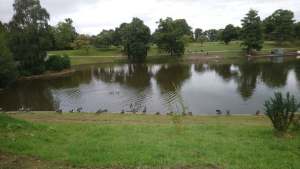
We parked outside the main gates and quickly found a suitably vacant bench beside the central lake, offering splendid views along its length towards Burma Island, which commemorates the Allied forces who fought in the Burma Campaign. As we sat, we watched and listened to the honking and quacking of a myriad of ducks and geese paddling through the water, randomly dipping their heads down, bottom-up, in search of submerged food.
Fascinated, we chomped our way through salmon sandwiches, freshly picked homegrown tomatoes, and mini cucumbers, finishing off with a packet of crisps and a Mars bar for dessert. Satiated, we set off to explore what we soon discovered was a pretty and well-maintained oval park, easily circumnavigated in under an hour.
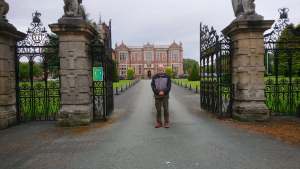
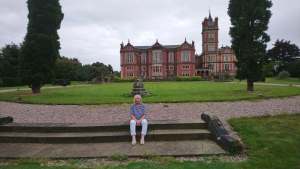

After check-in (with social distancing maintained via foot-printed trails and designated standpoints), we found our room in the newer part of the hotel, just a short walk through the original Jacobean building complex. Pleasingly, the room overlooked trees and grass in a quiet corner of the grounds and was well furnished, with an en-suite to die for. After a couple of coffees, we set off to explore the vast interior of this remarkable building.
The Crewe Estate was purchased in the late 16th century by Sir Randolph Crewe, and Crewe Hall itself was built in the early 17th century. It was significantly enlarged around 1800, while the landscape park was created during the 18th century. Formal gardens were added in the 19th century, and the house underwent refurbishment in the late 19th century. The earliest recorded structure on the site dates back as far as 1170 AD.
What a wonderful building to explore. Armed with a printout detailing its history and room descriptions, kindly provided by reception, we were encouraged to wander at will, opening any doors that were not locked (of which we only encountered one) and taking as much time as we liked to investigate. The blend of Jacobean and Victorian architecture and furnishings was awe-inspiring. A fortune had clearly been spent on this building, and time had done little to dull its opulence. Returning to our smart, hygienic, and high-tech modern room felt like something of an anti-climax.
Dinner was in the hotel Brasserie, located in the same modern outbuilding as our room complex. Fine food and wine were served by attentive waiters adhering to the new (and still unfamiliar) social distancing procedures. Thoroughly enjoyable, and I must admit, I rather liked the distancing between tables, no distractions from neighbouring conversations. One small plus for Mr Virus.
Before returning to our room, we chose to explore the oldest part of the Hall, keen to experience its magic under dimmed, atmospheric lighting. There were no other guests about, just a lone receptionist engrossed in paperwork. I asked if she ever felt uneasy being alone in such an ancient building, but she simply smiled and replied that she preferred her own company and enjoyed the silence of the night shift. When I asked if she had ever seen or heard of any ghosts, she admitted there were tales but insisted she had never experienced anything herself. She wasn’t worried.
Safely back in our brightly lit, modern room, I did a little research on the history of the building.
5th August 2020: After testing positive for coronavirus, 65 people have died in the UK.
After breakfast at the hotel, we left Crewe behind and headed towards North Wales and the small village of Caergwrle. It was a pleasant hour’s drive, much of it along narrow, winding roads, passing through quiet, picturesque Welsh settlements.
On arriving, we parked in the village car park and sat for a while on my mother’s memorial seat (Thelma Parsonage), installed five years ago at the base of Caergwrle Castle. It hardly seems that long ago.
As we began our climb up the steep slope of the ancient fortress, a light drizzle set in. By the time we reached the top, the heavy, moisture-laden clouds had drifted past, and the sun made a welcome appearance.
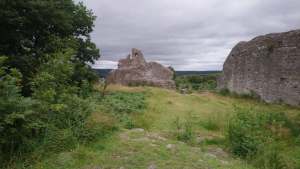
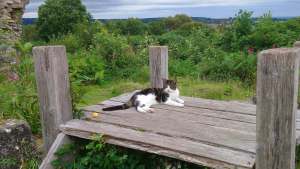
As if by premonition, we were greeted by the same friendly, purring cat that welcomed us on nearly every visit (bar one) to this special spot, where we scattered Nan’s ashes. Lockdown has taken its toll on the upkeep of the ruins, bracken and weeds have grown in profusion around the skirts of the castle and have even encroached within the walls themselves. I do hope the authorities put their strimmers to good use soon on this important piece of Welsh history.
Returning to the village, we made a brief visit to Aunt Doreen to show her some photographs of the newest member of the clan, Alice Thelma. Keen to visit Mold Market, we stayed for just half an hour.
By the time we arrived, the market was in full swing. Due to social distancing measures enforced by the council, stalls had been spread across several streets rather than just the usual High Street location. The locals were out in force, though few were wearing masks.
Unexpectedly, we came across Noel and Gaye at the top of the High Street. They had just returned from Southport and had stopped by the bank to pick up some Euros for their trip to France the following day. We were fortunate to see them; they hadn’t even been home yet. Remarkably, the last time we bumped into them unexpectedly was in Caergwrle, while visiting Nan’s ashes. A rather spooky déjà vu!
After wishing them Bon Voyage, and before heading to our accommodation for the night, I bought a face mask from one of the market stalls. This one has a valve and promises not to fog up my glasses.
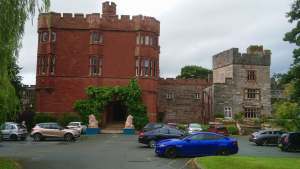
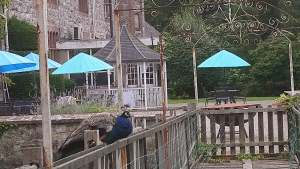
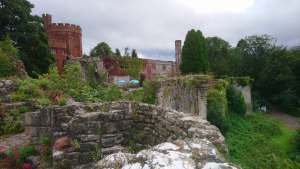
With the exterior thoroughly explored, we ventured inside to investigate the building’s interior. As expected, the rooms had been repurposed over the years, yet their grandeur and opulence were comparable to those of Crewe Hall. However, our access was limited, with only modern, sanitised rooms open for inspection.
Most appeared to be designed to cater for the wedding market, blending medieval charm with heraldic touches to enhance the atmosphere of the occasion.
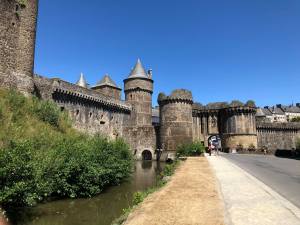
Jamie visited a French castle, spooky eh?
6th August 2020: After testing positive for coronavirus, 49 people have died in the UK. Belgium, the Bahamas, and Andorra have been added to the UK’s coronavirus quarantine list following a spike in cases in those countries.
After breakfast, we left Ruthin Castle and drove the short distance into town. After parking up, we took a wander around its small but quiet and picturesque centre. At its heart lies a small roundabout, surrounded by a cluster of well-preserved medieval buildings, many with name plaques detailing past occupants and their exploits. Ruthin has played an important role throughout history, with many of its inhabitants shaping Britain’s past. One such figure was Sir Thomas Exmewe, born around 1454 in Ruthin, Denbighshire. A member of the Goldsmiths’ Company, he was elected Sheriff of London in 1508 and later became Lord Mayor of London on 5 December 1517.
While resting outside the well-preserved courthouse, I noticed a plaque dedicated to Charles Mahoney, who was hanged from a gibbet positioned under the eaves in 1679. A quick bit of research revealed a sad tale of unlucky misfortune.
With our thirst for history satisfied, we set off to visit Aunty Josie in Brymbo, making a brief stop at Llandegla Forest. Initially, we had planned a short ramble through this ‘Area of Outstanding Natural Beauty’, but on arrival, we found ourselves queuing behind a long line of cars packed with mountain bikers. It quickly became apparent that the area was a Mecca for off-road cyclists, far too busy for a peaceful stroll through the Welsh countryside, so we moved on.
When we arrived at Josie’s, we found her entire street undergoing roof replacements and external insulation work by the council. Each house was covered in scaffolding and crawling with workers, making it difficult to identify her home. Thankfully, her next-door neighbour came to our rescue.
We presented Josie with a large carrot cake we had bought from the market in Mold, then spent a couple of hours chatting before leaving, with a Singer sewing machine and treadle stuffed into the rear of the Fiesta! Charlotte had admired the machine on our last visit, and, in a lovely gesture, Josie had decided to gift it to her.

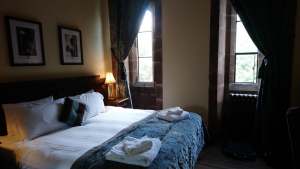
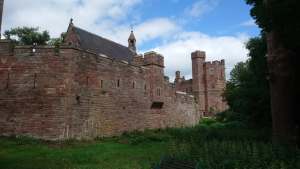 We arrived at Peckforton Castle around 2 pm and were one of the first to check in for that day. The castle was the location of the Kevin Costner movie, Robin Hood: Prince of Thieves. We have explored the grounds surrounding the castle and some of the internal facilities on previous occasions, but after finding our room, that is what we did again. The castle is a Victorian country house built between 1844-50 in the style of a very convincing medieval castle. Surprisingly, there were only 48 rooms for guests, and by late afternoon, it looked as if most of those were going to be occupied, judging by the number we saw wheeling their suitcases through the portcullis. COVID-19 is obviously no deterrent to would-be Robins and Maid Marions.
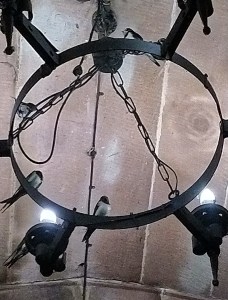
We rounded off the afternoon with drinks in the library before soaking up the last warm rays of the sun from our seats by the castle walls, watching butterflies feed on the buddleia and swifts snatch insects from the air.
Dinner was a ‘fine dining’ experience in the hotel restaurant. The food was excellent and beautifully presented, though we couldn’t help but be amused by the minuscule portions in contrast to their exorbitant cost. We completed the fantasy with a leisurely stroll around the violet-lit castle walls, where we spotted some swifts perched among the lights in a side entrance. A lovely way to end the day.

 7th August 2020: After testing positive for coronavirus, 98 people have died in the UK. Holidaymakers returning from France could soon face quarantine restrictions amid concerns that the country is experiencing the early stages of a second wave. This may pose difficulties for Jamie and Ruth upon their return.

Delamere
On a day when the south and east of the country sweltered in 36.4-degree heat, we were relieved to find Cheshire a more manageable 26 degrees. After breakfast in Peckforton, we drove to Delamere Forest to follow one of its walking trails around the mere (small lake).
The area, pockmarked with lakes and bogs, relics of the last Ice Age, has suffered in recent decades from the encroachment of surrounding woodland due to drainage and poor management. However, initiatives are now in place to reverse this process and restore the landscape, encouraging a greater diversity of wildlife.
Our ramble took just over two hours at a leisurely pace. It was evident that in some areas, young silver birch had encroached significantly, reducing what must once have been a much larger and more impressive lake. The well-signposted routes were popular with both walkers and cyclists, and we were rarely alone on our circuit of the water. By the time we had finished, the air had turned muggy, and the Fiesta’s air conditioning was a welcome relief as we set off for our accommodation for the night, Nunsmere Hall Hotel.
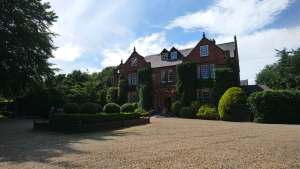

Built around 1900 for Sir Aubrey Brocklebank, Chairman of The Brocklebank Line, and his wife, Lady Grace Brocklebank, the hall was for many years a private residence, hosting glittering parties and embodying the gracious lifestyle of Edwardian high society. After Brocklebank’s shipping business merged with the renowned Cunard Company, Sir Aubrey turned his attention to designing the iconic Atlantic liner, Queen Mary. It is said that the beautiful lake encircling the hall served as his inspiration.
Arriving a couple of hours too early for check-in, we inquired about a nearby pub where we could enjoy some refreshments. The hotel was just reopening after lockdown, and not all its facilities were available. Coincidentally, the receptionist on duty was the same one who had checked us into Peckforton Castle.
The recommended Fishing Pool Inn proved to be an excellent choice. Just a short drive away, it boasted a spacious garden and efficient service. We found a table outside, shaded by a large umbrella from the intensifying heat, and spent a couple of relaxing hours sipping drinks and watching the world go by.

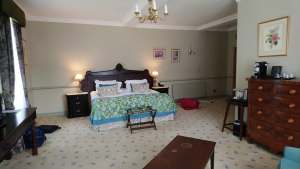
Returning to the hotel, we were the second couple to check in. The rooms, all named after varieties of flora, included ours, Camellia. It was a splendidly large room with first-class facilities. After setting down our bags, we set off to explore the grounds and the building. The hotel is surrounded on three sides by a deep and picturesque mere and features beautifully designed gardens.
As a little indulgence, we had booked an afternoon cream tea with a glass of prosecco for 4 pm, served in one of the ground-floor lounges overlooking the patio. Afterwards, we walked off a few of the calories with another wander around the grounds, this time venturing as far as the mere’s shore and its small hotel jetty. Watching the wildfowl arrow across the still water, with the soft glow of the late summer afternoon sky reflected on its surface, was utterly charming, possibly romantic, and certainly relaxing.
We spent the evening enjoying the comfort of our room and puzzling over how to operate the supplied Magimix Nespresso machine.
Following her resignation and the 1992 General Election, Margaret Thatcher stayed at Nunsmere Hall while writing two volumes of her memoirs: The Downing Street Years and The Path to Power. I am not surprised that the peace and tranquillity of the house and its grounds provided such a controversial and divisive political figure with the space to reflect on her tumultuous years in office. Sue and I certainly felt relaxed, though we did wonder whether the ghost of Mrs T might disturb our peace!
8th August 2020: After testing positive for coronavirus, 55 people died in the UK.
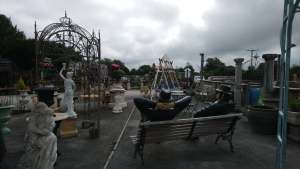
After a leisurely breakfast, we checked out of the hotel and drove a short distance up the road to Reclaimed World, a unique, family-run reclamation and antique emporium brimming with curiosities. We spent about an hour mooching around the expansive yard, fascinated by the eclectic range of items for sale.
We briefly considered buying a large red post box for the front of the house and spent some time trying to negotiate the rather hefty price. However, the seller refused to budge, and after a quick search online, I found a similar one available for considerably less, so we decided to leave it.
 The drive home took a couple of hours.
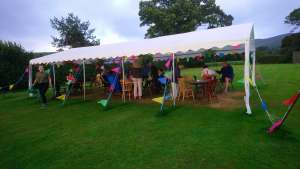
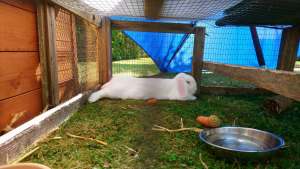
To show our appreciation, we invited Viv and Ian over in the evening for drinks and nibbles in the garden as a thank-you for looking after Jamie’s rabbit and watering the greenhouse while we were away. As they also brought their own liquid refreshments, the gathering turned into quite a late night.
It’s nice to be back home, but travel is in our DNA, and this pandemic has been a constant source of frustration for our ever-itchy feet.


Leave a Reply